
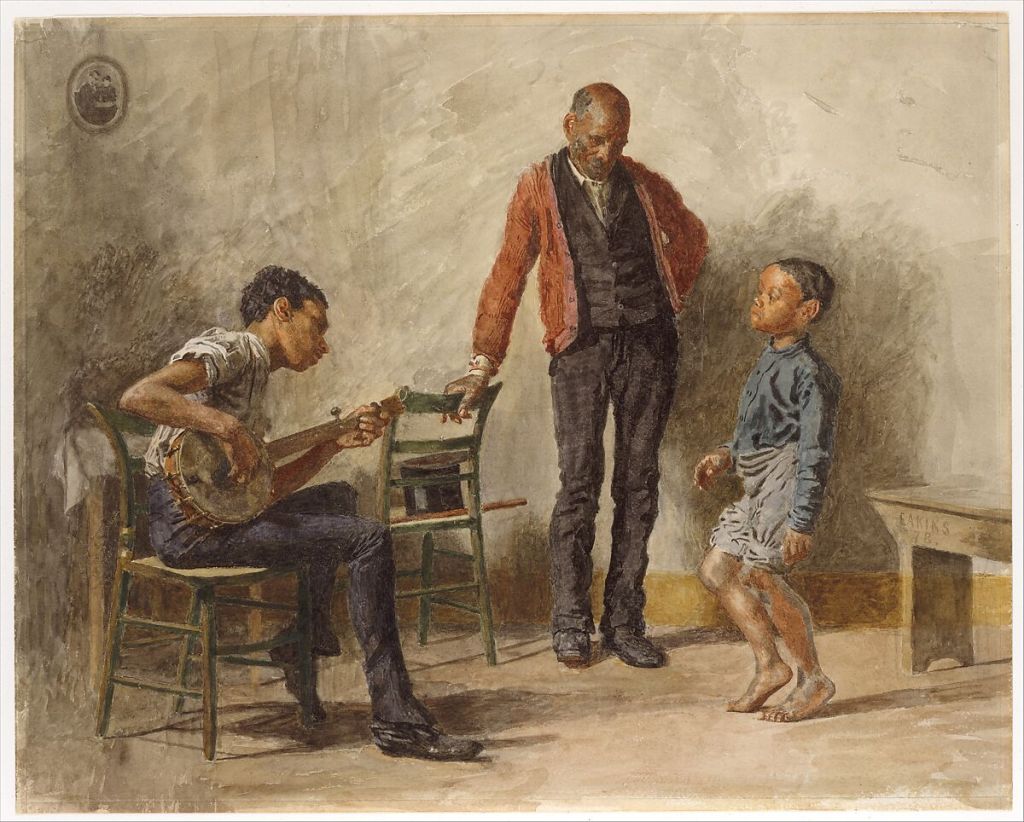
To truly teach something to another human being—that is, to impart useful and/or wonderful knowledge to someone else—you must build a relationship with them. However brief, however tenuous, a bond must be formed—the channel through which that knowledge can pass.
So to be a teacher—that is, to be in charge of the care and knowledge of many young minds—is to build many relationships. Just this past school year, I built at least 100.
Over 100 opportunities to guide a young person’s thinking.
Over 100 chances to clear misconceptions.
Over 100 young societal participants for whom to be a role model and demonstrate civility and maturity.
Over 100 interests to encourage, passions to support, and fears to question.
Over 100 backgrounds to dig through, nodding to commonalities and marveling at differences.
Over 100 unique connections with the future of our world.
As of this writing, I just finished my second year as a high school English teacher to a mostly Spanish-speaking, mostly immigrant student population from Mexico and Central America. Because I can speak and read Spanish, many of these relationships were strong, as both sides were able to express themselves clearly and also connect with a fuller version of the other’s personality. With the occasional help of Google, this allowed me to peek into their world—a perspective more alien to me and, therefore, potentially more valuable. I felt the need to record what I saw.
I gave 82 students a questionnaire to document the characteristics of their lives, to pay witness to their realities, to strengthen our relationships and, ultimately, to improve their care and pedagogy. I will share the results of that questionnaire, as well as some of my overall notes and analysis.
The relationship between teacher and student
Teachers are not obligated to share their personal life with their students nor incorporate it into their teaching. Neither are they obligated to dig into the personal lives of their students and use it to improve instruction. For a good relationship between the two, therefore, it’s possible to simply build a connection to a communal place and use that connection for development. Put another way, work friends can just be work friends.
Except not always. With a teacher and a student, the relationship is uniquely dynamic and potent, dealing not just with knowledge but the potential to use that knowledge in great or evil ways. Throwing personal ingredients into the mix is not necessary but does lead to interesting outcomes at the right times.
This is all to say that the responsibilities of both teacher and student can be fulfilled without building anything rosy and heartfelt like one might feel at the mention of the word “relationship.”
But when the teacher is strategic with what personal information is shared, or when the teacher closely examines student backgrounds, or when the students learn of certain personal stories of their teachers, the relationship can strengthen beyond the sufficient and the learning can extend beyond the required curriculum.
For example, if I am anything but a science or health teacher—if I teach English, Art, or History—it is probably not in my curriculum to talk about drugs. That is to say, that teacher-student relationship can fulfill its potential—I can teach and that student can learn literature, movies, historical periods, etc.—without any personal talk about such substances. Yet an intelligent, personal discussion of the topic—which includes, of course, where to go to find more accurate information—can deepen the relationship, uncover more useful knowledge, and prime students for better conversations about these issues in the future.
After all, what is a high school without being a place of experimentation, wise and unwise? The conversation could look like this: teacher obviously notices some students are under the influence and says aloud “Yes, drugs can be very useful, and very dangerous, and I know from personal experience” and student thinks “Wow, even my teacher, an (successful?) adult, has used drugs, so they must not be bad all the time” or “Wow, even my teacher, an adult, has had a bad experience with drugs, I better learn more about them,” or it will simply pass over them as it does to some students. Many students will ask more questions, some will not stop digging, and it is up to el maestro to guide that discussion, or end it, to the benefit of all parties.
One might argue: a teacher should only teach the curriculum, and anything beyond that is inappropriate. But let us not forget the ultimate goal of the relationship between teacher and student: to impart knowledge. If there is a strong bond between the two, if there is an opportunity for real, actionable knowledge to be attained, then it can be used to impart wisdom not only related to the curriculum but to life itself. It would be unwise to waste a good opportunity to demonstrate a life lesson simply because it was not on the syllabus.
That is part of what I aimed to do with this student survey: to take advantage of a good opportunity, a good relationship, to learn more about my students, and to use that knowledge to better their teaching and guidance.
At the heart of my argument is the axiom that knowledge is power. It’s not only the power to control one’s environment, but also the power to manage expectations, the power to be mindful of emotion and its causes, and the power to shape one’s worldview and behavior. Therefore, a relationship built around knowledge—that between a teacher and their student—is potentially a very powerful thing. It’s important to see knowledge as power in this way—as a potentiality—so that we as educators focus on giving each student a chance to safely pursue their potential, no matter what’s on the curriculum.
The survey says…
To get the following data, I managed to get 82 of my kids in 82 separate 1-on-1 interviews. I was mostly looking for quantitative data that would make them easier to categorize in certain ways, but I also dug further at times to see how willing students were to share dramatic (or traumatic) experiences that defined them, usually regarding family and immigration. I’ll weave the two strands of results together.
First, only 10 of my students were U.S. citizens, by birth or otherwise. Some of those students moved south to Mexico or Central America at a young age and later returned, therefore though their English might be poor, at least they had the luck to be born within our borders.
Most of my students immigrated from El Salvador (30.5 percent). Then comes Honduras (28 percent), Guatemala (10 percent), Mexico (8.5 percent), and Nicaragua (7.3 percent). There was one South American student from Peru, and only two non-Spanish-speaking students, one Haitian who spoke Haitian Creole and French and one African student from Chad who spoke French.
Many of these students traveled alone. Imagine being a parent and feeling so desperate that you have to pay a smuggler to take your eldest child by boat, bus, or on foot to the Texas border in the hope that they can connect with a distant relative and start to work and send you back some money. Or imagine being that teenager, on the road for weeks with strangers, fully reliant on the goodwill of these strangers and equipped only with a backpack and the name of some aunt or uncle in the States whom you’ve never met but to whom you will be tied in this new, foreign land.
Some students arrived at the border, waited, were sent back to Mexico, waited, and were taken back north again. Even if the young man or woman being shuffled around is only thinking about the next meal, their family must be thinking “No, they have the best chance in the United States. We must try again.”
Upon arriving in Houston, over a third (36.6 percent) of my students did not live with at least one member of their immediate family. Many lived with aunts, uncles, older siblings, step-siblings, and some with family friends who passed as relatives. Most of my students (67 percent) were 16 or 17 years old.
Over 28 percent (at least 20 students) had a job of some kind outside of school. I’ll never forget the student with whom I compared weekly schedules and he remarked, “I work more hours than you every week.” It wasn’t a show of dominance, but the directness of the comment did make me feel lesser in a way. Imagine starting high school at 8:25 a.m., finishing after 4 p.m., working until midnight or later, trying to reclaim some time scrolling TikTok or streaming Netflix in the early morning, and then finally getting 6 hours of sleep if you’re lucky. Then repeat and repeat. If you were my student, it is almost imperative that I knew this about you instead of deducting points when you don’t finish the “Do Now” activity because you’re half asleep.
Finally, a vast majority of my students (over 90 percent) had little to no prior English learning experience. They might have taken some classes in primary school in El Salvador, but most of the time those lessons were basic (imagine being an immigrant at 15 and your English vocabulary consists of little more than some numbers and “How are you?”) and they were probably taught by someone who was a non-native speaker. I was given the impossible task of bringing these students to “grade-level English” ability, but I never treated them as if this was the goal. The goal was simply to improve, to move in the right direction in confident leaps or tiny, hesitant steps.
Hundreds and hundreds of relationships
The privilege of being a teacher is in the proximity to potential. You are right there on the cusp of development. You get to experience the moment that something clicks in someone’s mind. Better yet, the students come and tell you about some recent revelation or progress, and you get to take some small ownership of their prideful grins.
Teaching is this, hundreds and hundreds of times.
The names and faces come and go in your memory. The notes, artwork, and papers get revisited now and then. The relationships though, they can live forever. As a teacher, I can build a connection with a student and then I can completely forget about them, but if I’ve done my job well, then even decades later they might realize, “That teacher saw this possibility in me,” or “In that classroom, I discovered my passion.” In other words, the student-teacher connection can still affect change, and can still help to actualize potential, years after the fact. The impression lingers, the knowledge recedes and comes back to the forefront of your mind, and repeats.

